Originally published in 2021. Food-safety and buying guidance updated November 10, 2026. The existing product listings below are retained from this legacy article; this update is not a new hands-on test or a current ranking. Prices, availability and product specifications have not been reverified.
The right grill thermometer depends on the job. An instant-read model lets you check individual burgers, chops and chicken pieces. A leave-in probe helps you follow a roast through a longer cook. If you grill quick meals and smoke large cuts, the two tools can complement each other.
Start with a thermometer that can measure the food you actually cook. A long feature list is less useful than a probe that fits a thin chop, a display you can read outdoors and clear instructions for safe use.
Safe Internal Temperatures for Grilling
Use the temperature inside the food, not the grill setting, cooking time or browned exterior. The federal safe-temperature chart gives these minimums for home cooking:
- Chicken and turkey, including ground poultry: 165°F (74°C).
- Beef, pork, veal and lamb steaks, chops and roasts: 145°F (63°C), followed by at least a 3-minute rest before carving or eating.
- Ground beef, pork, veal and lamb, including raw sausages made from them: 160°F (71°C). Poultry sausage needs 165°F.
- Fish, including salmon: 145°F (63°C).
- Leftovers and casseroles: 165°F (74°C).
For whole cuts that require a rest, reach 145°F before removing them from the heat, then start the rest. The 145°F pork recommendation applies to steaks, chops and roasts, not ground pork. A thermometer’s preset menu should be checked against the food and cut you are cooking.
What About Rare or Medium-Rare Steak?
Doneness labels describe eating preferences; they do not replace safety guidance. A steak cooked to 125°F or 135°F is below the recommended home-cooking minimum of 145°F plus a 3-minute rest. Raw dishes such as tartare and carpaccio are not safety exceptions. FDA advises people at higher risk of foodborne illness, including pregnant people, young children, older adults and people with weakened immune systems, to avoid raw or undercooked meat.
Color is unreliable in either direction. Pink meat is not automatically undercooked, and a brown center does not establish that food is safe. Follow FDA’s safe-food-handling guidance and verify the internal temperature.
Choosing an Instant-Read Thermometer for Steaks and Chops
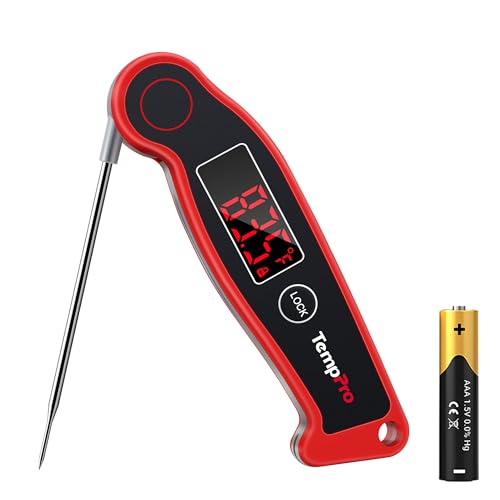
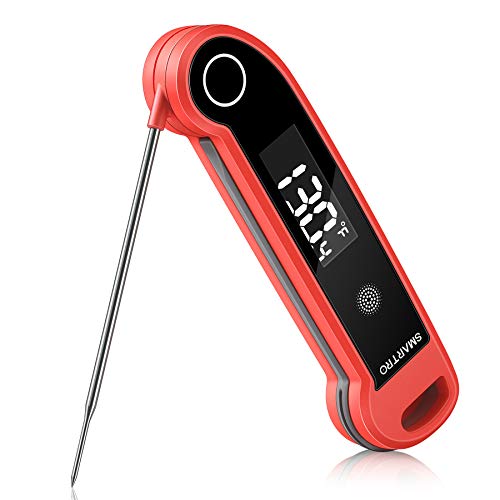
For a batch of small pieces, a handheld instant-read thermometer makes it easy to move from one piece to the next. Look for a thin probe with a sensing area that fits fully inside the food, a readable display and a stated response time. “Instant-read” does not mean the first number that flashes on the screen is the final reading.
Place the sensing area in the thickest meat, away from bone, fat and gristle. For a thin burger or chop, insert from the side so the sensor reaches the center without passing through to the hot grate. Follow the maker’s insertion-depth instructions, wait for the reading to settle and check each piece. These placement principles are explained in USDA’s Kitchen Thermometers guide.
Do not leave a handheld instant-read thermometer in a closed grill unless its manufacturer explicitly permits that use. For chicken-specific checking locations, see our chicken-temperature guide.
Instant-Read Thermometer Listings



Choosing a Leave-In Probe for Roasts and Smoking
A leave-in thermometer tracks the temperature at its sensor during a longer cook. Choose one specifically rated for your cooking method, and check the limits for the probe, cable and transmitter separately. A food-temperature range is not necessarily the maximum heat the exposed parts can tolerate.
Position the probe as its instructions require. Keep cables away from direct flame, sharp edges and places where the lid could crush them. Protect the display or transmitter from heat and weather according to its rating. A leave-in reading tracks one location; use final checks in other thick areas before serving.
For whole poultry, check the thickest breast and the innermost thigh and wing, avoiding bone. Our smoked-turkey guide explains why one breast-probe reading does not clear the whole bird.
Alarms are helpful reminders, but they do not make a grill safe to leave unattended or guarantee that food cannot overcook. Stay responsible for the cooker and follow its operating instructions. The Illinois State Fire Marshal’s grilling guidance also warns against leaving a grill unattended.
What to Check Before Buying
- Probe fit: Check the required insertion depth against the smallest food you cook. A thick wireless probe may not suit a thin chop.
- Separate measurements: Decide whether you need food temperature only or an additional probe rated for the cooking chamber.
- Connections: Confirm whether the system uses cables, a dedicated receiver, Bluetooth, Wi-Fi or a combination. “Wireless” does not always mean the food probe itself has no wire.
- Alerts and power: Check how alarms work, whether a phone is required, battery life and charging needs. Test the connection with the lid closed and your normal setup before relying on it.
- Care and replacement: Read cleaning instructions and check whether replacement probes, cables and batteries are available for that exact model.
Corded Probe Thermometer Listings
A cable connects the food probe to a display or transmitter outside the cooker. Compare cable length, heat limits and the number of probe inputs, rather than assuming every oven probe is suitable for direct-flame grilling.


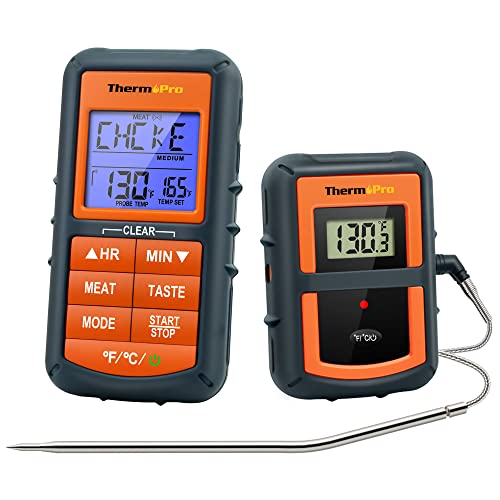

Wireless Thermometer Listings
Check the exact model’s connection requirements and probe design. Advertised range is not a guarantee in your yard, and a connection or battery problem can interrupt monitoring. Keep a way to check food temperature directly.


Grill Thermometer FAQs
Do I Need Both an Instant-Read and a Leave-In Thermometer?
Not for every meal. A suitable instant-read is a practical starting point for burgers, chops and chicken pieces. Add a leave-in model when following a long cook would be useful. Even with a leave-in probe, check other parts of a large or uneven cut before serving.
Can the Grill’s Lid Thermometer Tell Me the Meat Is Done?
No. It measures the cooking environment where it is mounted, not the interior of the food. Use a food probe in the meat. A chamber reading and a food reading answer different questions.
What If Two Readings Disagree?
Check probe placement, sensing depth and whether each reading has settled. Two different spots in a roast may genuinely be at different temperatures. Do not average them or choose the higher number to declare the food done. Continue cooking if a required checking location is below its minimum.
If you suspect an inaccurate thermometer, follow the manufacturer’s accuracy-check and calibration instructions. Do not assume every digital model is adjustable. Repair or replace a faulty device before relying on it for safety.
How Should I Clean the Probe?
Clean the food-contact probe with hot, soapy water before and after use, following the manufacturer’s directions. Clean it after checking undercooked food before using it again. Do not immerse the electronic display or put the device in a dishwasher unless the maker allows it. Our grill-side cross-contamination guide covers clean tools, separate platters and serving safely.
Source note: Food-safety guidance was checked against the current federal consumer temperature chart and FDA pages on November 10, 2026. USDA’s linked thermometer reference covers placement and care. The existing offer groups are shopping links, not evidence of new product testing or verified current prices.